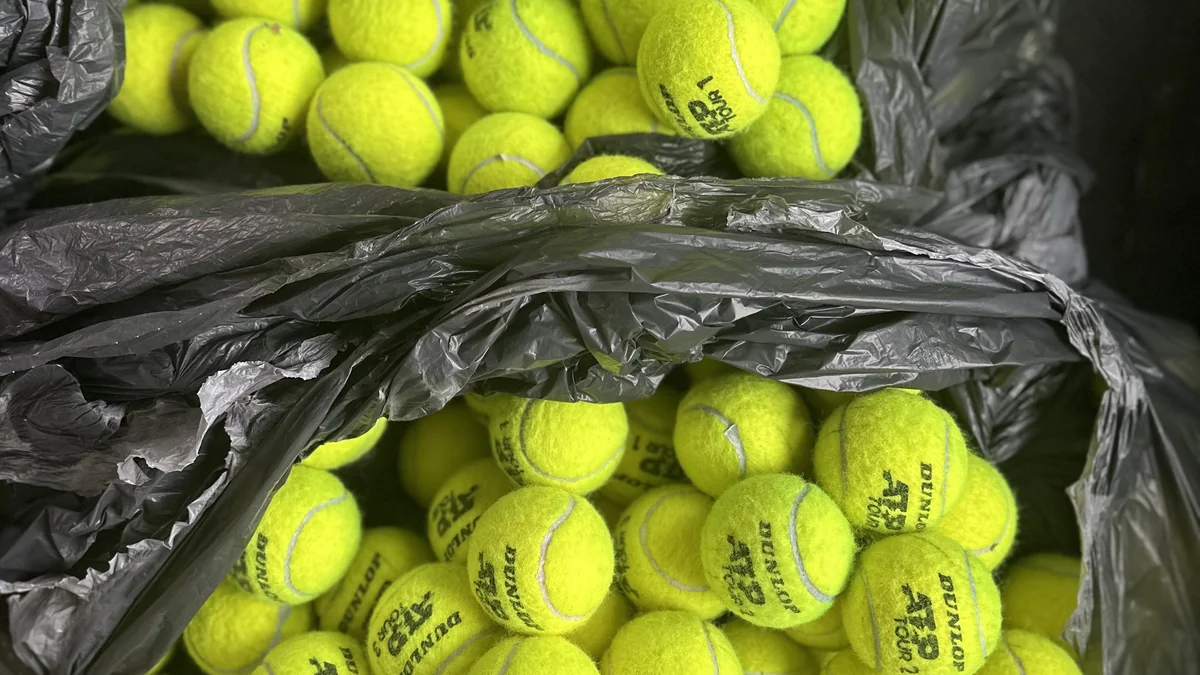
Walk into the back room of almost any tennis club, and you will find a bin, a bag, or a whole corner stacked with retired tennis balls — pressureless practice balls, balls pulled after a tournament round, balls from a hopper that has seen one too many drills. Nobody wants to just toss them, so they pile up instead.
A collection program solves that pile permanently, and it takes a lot less setup than most clubs assume. Here is how it works and how to start one.
Every Club Has This Problem
Balls get pulled from play constantly — they lose pressure, tournaments retire them after a set number of games, and practice baskets churn through hundreds a season. Multiply that across a club, a university program, or an annual tournament, and the numbers add up fast. Most of those balls still have plenty of life left; they are just done with competitive tennis.
Without a plan, they end up in the trash, where a tennis ball can sit for a very long time — or they sit in a storage closet indefinitely because nobody wants to be the one who throws them out. A collection program gives that pile somewhere useful to go.
How a Collection Program Actually Works
At its simplest, a collection program is just a designated bin and a pickup or drop-off routine. Balls that come out of play go in the bin instead of the trash. Periodically — weekly, monthly, or after a tournament wraps — the bin gets emptied and the balls move on to their next life: as dog toys, classroom chair covers, or donations to shelters and community groups.
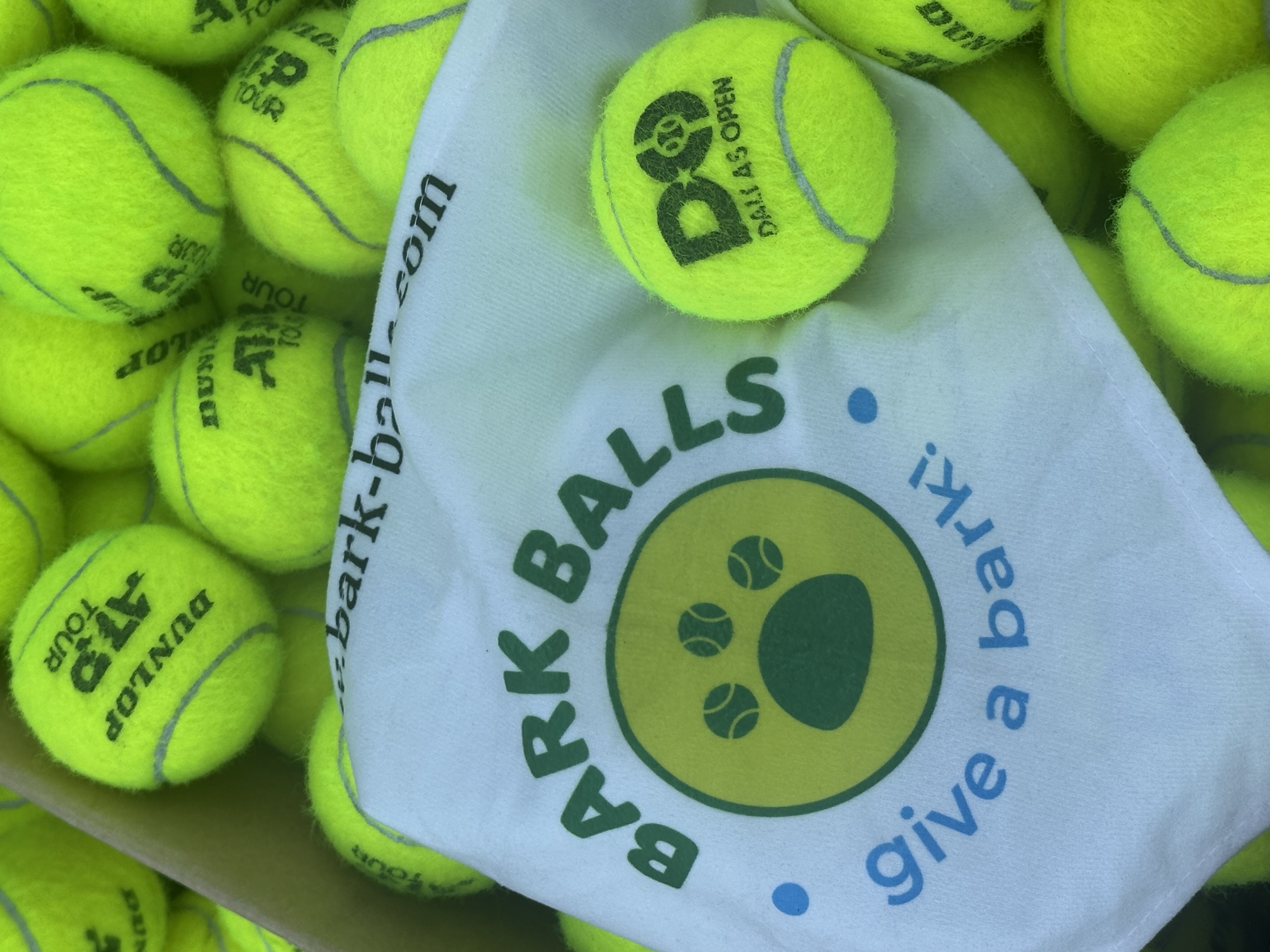
This is exactly what our Court-to-Canine™ program is built for. We work with tennis facilities, clubs, courts, and tournaments to set up an ongoing collection routine, so the balls that come off your courts get sorted, repurposed, and kept out of a landfill — with essentially no extra work on your end.
Setting One Up in Four Steps
1. Pick a Collection Spot
A labeled bin near the pro shop, the ball machine, or wherever balls typically get retired. Visibility matters more than location — players and staff need to see it to use it.
2. Set a Simple Rule
Any ball that is out of competitive rotation goes in the bin, no sorting required. Simplicity is what makes a program stick; if it takes thought, people skip it.
3. Decide Your Pickup Rhythm
Small clubs might collect monthly. A busy facility or a tournament might do it weekly, or as a single sweep at the event's end. Match the rhythm to your actual volume — there is no wrong answer, as long as it is consistent.
4. Connect With a Reuse Partner
This is the step that turns "a bin in the corner" into an actual program. A partner like Bark Balls gives the collected balls somewhere real to go, on a schedule that works for your facility. Reach out about Court-to-Canine and we will help you set up collection that fits your club.
Already have a pile waiting?
You do not need a formal program to send us a one-time batch. If your club, tournament, or team has balls sitting around right now, our donate page covers how to send them our way.
Why It's Worth Doing
A collection program is a small operational habit with outsized upside for a facility:
- It solves a real annoyance. No more storage closet full of balls nobody wants to deal with.
- It is a genuine sustainability story. A club that visibly reduces its waste has something real to point to — for members, sponsors, and marketing.
- It supports good causes. Balls collected through Court-to-Canine help fund support for animal shelters, environmental organizations, and community programs.
- It costs almost nothing. A bin and a pickup schedule is the whole investment.
Frequently Asked Questions
What kind of tennis balls can be collected?
Any ball retired from competitive play — practice balls, tournament balls, hopper balls — regardless of brand. Condition can vary, so check current guidelines on our donate page before a large drop-off.
Does starting a collection program cost anything?
Typically just a bin and a bit of staff attention to keep the routine going. Court-to-Canine partnerships are built to be low-effort for the facility.
How often should balls be picked up or dropped off?
Whatever fits your volume — weekly for a busy facility, monthly for a smaller club, or a single sweep at the end of a tournament. Consistency matters more than frequency.
Can a single tournament do this, or only ongoing clubs?
Both. A one-time tournament collection works just as well as an ongoing club program — it is simply a bigger single batch instead of a recurring smaller one.
What happens to the balls after collection?
They are sorted and repurposed — as dog toys, classroom chair covers, and donations to shelters and community organizations — keeping usable material out of landfills.
Every club has a version of that ball pile in the back room. Turning it into a collection program takes a bin, a habit, and a partner to send them to — and it turns an annoyance into something your whole club can feel good about.